Thursday, October 22, 2009

Posts

Lately I've been on this kick where I just research the shit out of a topic, learn about it, get too busy to write about it, and never end up doing anything with it. I have a backlog of items that I wanna talk about, record here and get feedback on.. and not all of the science influence either...

I also have a bit of a surprise coming up(!), but that's gonna have to wait a bit... Maybe a week, if that (I hope!) Just starting up the hype machine!

I'm in the middle of finishing up law school apps. Once that's done, I hope to catch up here a bit, especially with the music and art, as that takes more care than just reading, copying and pasting science interests. At least for me. I'm not the type of person who can work and listen to music at the same time;

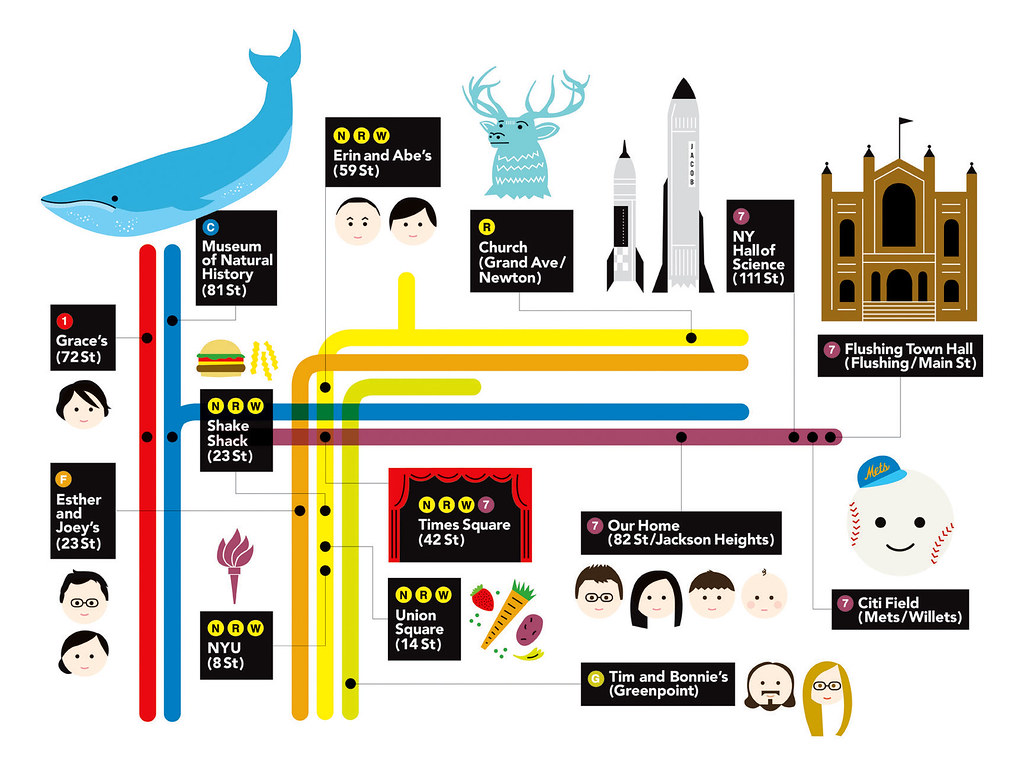
Anyway, here's a pretty cool and simple post from Kottke.org. A three year old's view of the NYC subway system.


A Toronto version would be a great Christmas gift idea...

UPDATE: like this:

So, why do leaves change colour?


If you, like me, said 'chlorophyll, something, something... ', read on.

http://ksnn.larc.nasa.gov/webtext.cfm?unit=leaves

Many people think deciduous trees lose their leaves because of cold weather and frost, a common misconception (umm.. my misconception), but actually the length of the day seems to be what determines when trees begin the process of changing colours and dropping leaves. During the shortened days of autumn there is not enough sunlight to outweigh the costs of chlorophyll maintenance and production, and the tree goes into hibernation mode. Once chlorophyll has stopped being produced, the red, golden and brown colours are "unmasked"; these colours are actually the natural colour of the leaves without the chlorophyll.

So's, why are the two pigments (carotene (responsible for yellow, orange and brown) and anthocyanins (red)) there in the first place? I mean, what is the evolutionary benefit of a leaf having these pigments? What is the benefit of having them show up there in the fall? It obviously just can't be a ho-hum, whateves decision on nature's part.

The pigments that produce yellow and orange leaves in the fall are present year-round, and help protect chlorophyll, the molecule at the heart of photosynthesis, from sunlight damage; when chlorophyll is broken down in the autumn those yellows and oranges become visible. In contrast, the red anthocyanins are produced only in the fall. It is a costly job of molecule building for the plant and an enigma to scientists, since the leaves will at that point soon be dropped entirely [BBC News]. (via discovermag)

Apparently no one knows why yet.

Possibly, the red colour could be a signal to insects that the leaves, and tree, are malnourished or have a built in chemical defense. This was postulated based on a single certain insect (aphids) that were less likely to grow to maturity living on red leaves rather than yellow or green leaves... this seems plausible, but yeah, where is the benefit to the tree?

Another possibility? David Wilkinson, an environmental scientist at Liverpool John Moores University who has published on the leaf colour debate, says that the work is not proof positive of the co-evolution theory (of insects and trees).

"I think the most likely explanation is that these [anthocyanins] are effectively sunscreens that allow the photosynthesis to continue as the machinery of photosynthesis is broken apart in the autumn.

"The idea of, as it were, 'the trees are talking to the insects', is wild and wacky and it would be rather nice if it were true.

"But I still have not seen anything that convinces me of the signaling."


(photo from Sarah used totally without permission - UPDATE: Now with permission!)

http://blogs.discovermagazine.com/80beats/2009/04/16/the-red-of-autumns-leaves-may-be-a-warning-to-pests/
http://blogs.discovermagazine.com/intersection/2008/09/22/the-science-of-autumn-colors/


This goes under the wait until next year pile, as experiments can only be done at specific times... maybe we'll get an update soon.


Wednesday, October 21, 2009

Way more than you've even wanted to know about sperm whales


So, why are they called sperm whales?

Got into an extremely short discussion about this last night... and no one seemed to know the answer.

"Sperm whale" is an apocopation of Spermaceti Whale. Spermaceti is the semi-liquid, waxy substance found in the animal's head. Spermaceti is found in the spermaceti organ or case in front of and above the skull of the whale and also in the junk, the area below the spermaceti organ and just above the upper jaw.[3] The case consists of a soft white, waxy substance saturated with spermaceti oil. The junk is composed of cavities filled with the same wax and spermaceti oil and intervening connective tissue.

The spermaceti organs may help in diving by adjusting the whale's buoyancy. Before diving, cold water is brought through the organ and the wax is solidified.[28][36] The increase in specific density generates a down force of about 40 kilograms (88 lb) and allows the whale to dive with minimal effort. During the chase in deep levels (max. 3,000 m) the stored oxygen is consumed and excess heat melts the spermaceti. Now only hydrodynamic forces generated by swimming keep the whale down, and it can surface without effort.

some more facts about sperm whales..

- Sperm whales can live 70 years or more.
- The sperm whale is among the most cosmopolitan species in the world, as it is relatively abundant from polar waters to the equator, and is found in all the oceans and the Mediterranean Sea.
- A single calf is born after a gestation period of 14 to 16 months.
- The brain of the sperm whale is the largest known of any modern or extinct animal, weighing on average about 8 kilograms (18 lb).[33][34] However, it is not particularly large in proportion to its body size. For example, the sperm whale has a lower encephalization quotient than many other whale and dolphin species, lower than that of non-human anthropoid apes and much lower than humans'.


Straight from wikipedia...

Tuesday, October 20, 2009

The art of forgeries


Errol Morris wrote a 7-part series in the NYTimes on the art of forgery.

Why do people believe in imaginary returns, frauds and fakes?

Bernard Madoff, A.I.G. , W.M.D.’s … How did this happen? Do we believe things because it is in our self-interest? Or is it because we can be manipulated by others? And, if so, under what circumstances?

Last year, two different books on that subject appeared within months of each other. Not only did both tackle the question of fakery, they were both about the same man: Han van Meegeren, arguably the most successful art forger of all time.

...

The charge on which Van Meegeren was arraigned specified that he sold works bearing the spurious signatures of famous artists. It was not a simple case of forgery, inasmuch as the defendant created the works after the style of the seventeenth century masters, without actually copying any of their canvases…

How did he do it? Why did he do it? Newspapers reveal the thinking and confusions of their time, but they don’t necessarily provide answers. Was Van Meegeren a collaborator or an artist? Or both? And if he was a genius, what was his genius? His ability to trick people? Or was he able to trick people because he was an artist of genius? Who was Van Meegeren? A con man or Nazi? Did he forge paintings solely for monetary reward or was something more sinister involved?

...

EDWARD DOLNICK: You would think a close copy would be the goal of a forger, but it might not be a smart way to go. If you were a brilliant technician it might be an acceptable strategy, but my forger, Van Meegeren, is not as good as that. So if he’s going to try to pass himself off as Vermeer, he isn’t going to do it by painting “The Girl With Two Pearl Earrings.” [3] He’s going to get in trouble, because that’s asking for a side-by-side comparison, and he’s not good enough to get away with that.

It wasn’t going to be about how “you can’t tell the difference,” because you could. It would be, “How could people look at these things which are manifestly so different and not see what’s going on?” It became a story about how experts can get it wrong, and in fact, how expert knowledge, instead of helping, can be a hindrance. On the surface it seemed to be a story about art and history, but really, it’s a story about psychology.

...

The Uncanny Valley is a concept developed by the Japanese robot scientist Masahiro Mori. It concerns the design of humanoid robots. Mori’s theory is relatively simple. We tend to reject robots that look too much like people. Slight discrepancies and incongruities between what we look like and what they look like disturb us. The closer a robot resembles a human, the more critical we become, the more sensitive to slight discrepancies, variations, imperfections. However, if we go far enough away from the humanoid, then we much more readily accept the robot as being like us

...

ERROL MORRIS: The question of this book of his watercolors and drawings that was found in Hitler’s library. What is your feeling about that whole deal?

EDWARD DOLNICK: Well, there are a lot of elements to that. One is that that book of drawings could have given the game away; the forgery, I mean, if anybody said, “Look, be-cause there’s a remarkably similarity between the crazy, heavy eye-lidded figures that he drew and the figures in his biblical Vermeers.” To look at those, you think right away, “Boy, these Van Meegerens and these newfound million-dollar Vermeers look awfully similar!”


Parts 1 and 2 are really, really great... along with part 6. Solid questions, good explanations, very well researched. Impressive article. The imitation of art and life, and the eventual mixture of the two really fascinates me. Where do you draw the line?; why did you draw the line? What makes a great copy - it isn't necessarily the closest match! More on this a bit later.. hopefully today.
Sloan at the Dakota


The Lines You Amend, Believe In Me, A Side Wins, Autobiography, The Rest of My Life, I Can Feel It, Keep On Thinkin'. Big win for One Chord to Another.

Deeper than Beauty would have been the kicker. Ugh... good show.

Deeper than Beauty:


Deeper Than Beauty lyrics

I suppose I've seen you three times now
And I guess that I'm wondering how
You keep the boys at bay
I have a feeling that they are wondering too
I've seen you with your hair down
At least five times, I've always wondered
What makes a man commit crimes
But even I would sometimes
If it weren't for the likes of you
And your glasses your hideous glasses
When you remove them I would rather
Skip my classes and be caught
Then to entertain the thought
That someday you'll just put them on again
But I can make the best of it until then
Still I know you go deeper than your beauty
You go well above and beyond tha call of
Duty to your country and your school
But I grew up too cool
I'm like the rest of them
With our thumbs up our asses
If you call I will come but
I'm about as quick as molasses
When I dream of you your not
Wearing any glasses

Either way, I just heard it...

More audio from this show to follow...

Monday, October 19, 2009

BBC Life: New series, sorta kinda like the Planet Earth series, 2.0

The pebble toad bounces away as a method of escape.


Oreophrynella nigra or Pebble Toad is a species of toad in the Bufonidae family. It is found in Venezuela and possibly Guyana. Its natural habitats are subtropical or tropical moist montanes and swamps.

When threatened the toad folds its limbs under its body, tucks its head in and tenses in a ball position. If on an incline, this causes it to roll down the slope, escaping the attentions of its predator. Its cryptic colouring blends with its sandstone habitat.

"Filming the bouncing toad was very challenging; the remote mountain plateau is one mile high and 26 square miles in area, whilst the toad is one inch long and very elusive. The tarantulas which prey on them are also very hard to find. To give the crew the best chance of finding and filming them, the expert on these creatures came on the shoot. He searched for a week before the crew's arrival to find both species and a location where they could come together and where the toad would demonstrate its bouncing-ball method of escape. This allowed the cameraman to set up his slow-motion camera in the right place. The scientist was able to ensure that the toad was never in danger of being harmed by the tarantula as a result of us filming them. The technique was a total success - the toad tucked its legs in, rolled and bounced, allowing the crew to film its method of escape in slow-motion detail."

Here are two more videos from the series:

Jesus Lizard walks on water:


Pygmy Gecko, floating on water


Really gorgeous series.. the slow-motion film, along with the camera angles really makes this look great.

(via Gizmodo)

Friday, October 16, 2009

Everyone's got a national dish to spread

http://nowthatsnifty.blogspot.com/2009/10/national-dishes-of-world.html

Canada - Poutine - (Province of Quebec), Pancakes with maple syrup, Beaver tail (pastry), Butter Tarts, Nanaimo Bar, Kraft Dinner,Salt cod - (Province of Newfoundland and Labrador)

Poland - bigos, barszcz, pierogi


(Barszcz Czerwony - among the most delicious things you will ever taste)


Also, has no one staked claim to Tartare>?!


The basis of the name is the legend that nomadic Tatar people of the Central Asian steppes did not have time to cook and thus placed meat underneath their horses' saddles. The meat would be tenderised by the end of the journey. (Wikipedia)

Best. Article. Ever.


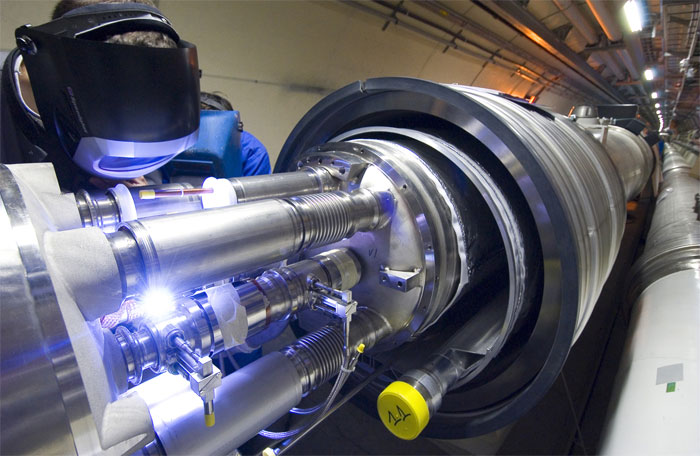
Are time travelers sabotaging our Large Hadron Collider to protect the future of the universe?

"A pair of otherwise distinguished physicists have suggested that the hypothesized Higgs boson, which physicists hope to produce with the collider, might be so abhorrent to nature that its creation would ripple backward through time and stop the collider before it could make one, like a time traveler who goes back in time to kill his grandfather."

This malign influence from the future, they argue, could explain why the United States Superconducting Supercollider, also designed to find the Higgs, was canceled in 1993 after billions of dollars had already been spent, an event so unlikely that Dr. Nielsen calls it an “anti-miracle.”

(via instapundit)

Wednesday, October 14, 2009

Augmented reality art..

Chris O'Shea, an artist with latent fantasies about growing into a giant and teasing, then destroying, the people of Liverpool, England, has a new installation! It's a live video billboard that teases, then destroys, the people of Liverpool, England.

Hand From Above encourages us to question our normal routine when we often find ourselves rushing from one destination to another. Inspired by Land of the Giants and Goliath, we are reminded of mythical stories by mischievously unleashing a giant hand from the BBC Big Screen. Passers by will be playfully transformed. What if humans weren’t on top of the food chain? Crush your head?

The effect is playful and charming for adults, though it may cause minor metaphysical crises in small children and pets. For art!

(via gizmodo)

Friday, October 9, 2009

Ken Burns' National Parks torrents


Updated from here.

Here they are:

Episode One: "The Scripture of Nature"

Episode Two: "The Last Refuge"

Episode Three: "The Empire of Grandeur"

Episode Four: "Going Home"

Episode Five: "Great Nature"

Episode Six: "The Morning of Creation"

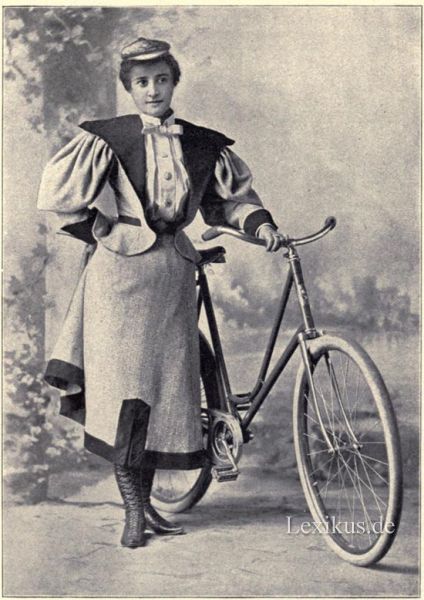
Proportion of women cyclists as indicator of infrastructure safety


http://www.scientificamerican.com/article.cfm?id=getting-more-bicyclists-on-the-road

In the U.S., men’s cycling trips surpass women’s by at least 2:1. This ratio stands in marked contrast to cycling in European countries, where urban biking is a way of life and draws about as many women as men—sometimes more. In the Netherlands, where 27 percent of all trips are made by bike, 55 percent of all riders are women. In Germany 12 percent of all trips are on bikes, 49 percent of which are made by women.

“If you want to know if an urban environment supports cycling, you can forget about all the detailed ‘bikeability indexes’—just measure the proportion of cyclists who are female,” says Jan Garrard, a senior lecturer at Deakin University in Melbourne, Australia, and author of several studies on biking and gender differences.

Women are considered an “indicator species” for bike-friendly cities for several reasons. First, studies across disciplines as disparate as criminology and child ­rearing have shown that women are more averse to risk than men. In the cycling arena, that risk aversion translates into increased demand for safe bike infrastructure as a prerequisite for riding.

Ahead of the curve may be New York City, where about five miles of traffic-protected bike lanes have recently been installed. Credit goes to the new Department of Transportation commissioner Janette Sadik-Khan, who is upending the department’s long-standing focus on trucks and automobiles. Remarks Pucher: “A woman cyclist became head of the DOT, and wonderful things started happening.”

I'm not sure I totally agree with this, but it may show something. It could also be correlated with the number total cyclists from total cycling inclined stats (which admittedly does have more than something to do with safety and infrastructure). Still, it sounds like an interesting paper.