Saturday, November 21, 2009

A Case for Working With Your Hands


http://www.nytimes.com/2009/05/24/magazine/24labor-t.html

When we praise people who do work that is straightforwardly useful, the praise often betrays an assumption that they had no other options.

We idealize them as the salt of the earth and emphasize the sacrifice for others their work may entail. Such sacrifice does indeed occur — the hazards faced by a lineman restoring power during a storm come to mind. But what if such work answers as well to a basic human need of the one who does it? I take this to be the suggestion of Marge Piercy’s poem “To Be of Use,” which concludes with the lines “the pitcher longs for water to carry/and a person for work that is real.” Beneath our gratitude for the lineman may rest envy.

...

There is a pervasive anxiety among parents that there is only one track to success for their children.

...

The trades suffer from low prestige, and I believe this is based on a simple mistake. Because the work is dirty, many people assume it is also stupid. This is not my experience.

...

There probably aren’t many jobs that can be reduced to rule-following and still be done well. But in many jobs there is an attempt to do just this, and the perversity of it may go unnoticed by those who design the work process ... Any given symptom may have several possible causes, and further, these causes may interact with one another and therefore be difficult to isolate. In deciding how to proceed, there often comes a point where you have to step back and get a larger gestalt. Have a cigarette and walk around the lift. The gap between theory and practice stretches out in front of you, and this is where it gets interesting. What you need now is the kind of judgment that arises only from experience; hunches rather than rules. For me, at least, there is more real thinking going on in the bike shop than there was in the think tank.

...

I once accidentally dropped a feeler gauge down into the crankcase of a Kawasaki Ninja that was practically brand new, while performing its first scheduled valve adjustment. I escaped a complete tear-down of the motor only through an operation that involved the use of a stethoscope, another pair of trusted hands and the sort of concentration we associate with a bomb squad. When finally I laid my fingers on that feeler gauge, I felt as if I had cheated death. I don’t remember ever feeling so alive as in the hours that followed.

Often as not, however, such crises do not end in redemption. Moments of elation are counterbalanced with failures, and these, too, are vivid, taking place right before your eyes. With stakes that are often high and immediate, the manual trades elicit heedful absorption in work. They are punctuated by moments of pleasure that take place against a darker backdrop: a keen awareness of catastrophe as an always-present possibility. The core experience is one of individual responsibility, supported by face-to-face interactions between tradesman and customer.

...........................................................................

Sometimes I really like my job for this reason. If I get bored in the office and feel the need to work with my hands, I can go down to the garage and observe, tinker, lend a (very novice) helping hand, hang out and learn the ins and outs of an isolated system being currently worked on (a gas pump failure, vehicle overheating, vacuum leaks, etc.). Beyond the learning, there is a certain immediate gratification with every small step you take while working with your hands. Whether it's drilling down a line of steel bolts, cutting up stainless steel at step 1 of a project, or suggesting a solution to a mechanical problem that hasn't yet been thought of because you're really just an outside eye; there is a certain immediate gratification that is not reached when pressing save and send on a spreadsheet. Then, I can go back into the office, sort of refreshed (perspective?), and continue at the desk doing desk stuff.

Writing invoices, preparing ad campaigns, researching tech, gathering/organizing statistical information, government bs, payroll, cheques, organizing schedules, preparing for operations, etc.; soft skills? There really isn't an immediate satisfaction. The variety is certainly there, but something is definitely not. Maybe, more specifically, it's an immediate recognition of your worth. I think that's part of the reason I like work road trips so much. At the end of the trip I know exactly how much I made and saved the company. Granted I spend 95% of my time at the desk, but if it wasn't for that 5% in the garage and on the road, I most certainly wouldn't still be at the PHD Group.

Friday, November 20, 2009

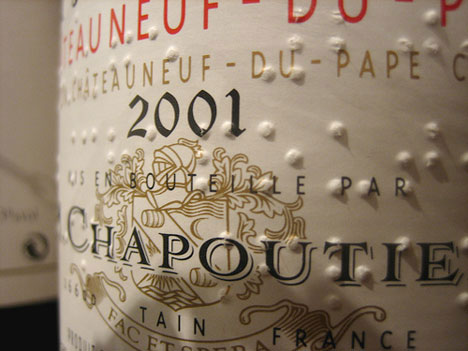
Yes, yes, but is your book available in Braille?

Or, what's new in the world of Braille?

The Braille system is a method that is widely used by blind people to read and write. Braille was devised in 1821 by Louis Braille, a blind Frenchman (Wikipedia). Each Braille character or cell is made up of six dot positions, arranged in a rectangle containing two columns of three dots each.

As originally conceived by Louis Braille, a sequence of characters, using the top four dots of the Braille cell, represents letters a through j. Dot 3 is added to each of the a through j symbols to give letters k through t. Both of the bottom dots (dots 3 and 6) are added to the symbols for "a" through e to give letters u, v, x, y, and z. The letter w is an exception to the pattern because French did not make use of the letter "w" at the time Louis Braille devised his alphabet, and thus he had no need to encode the letter "w".


(potential) new Braille technology:


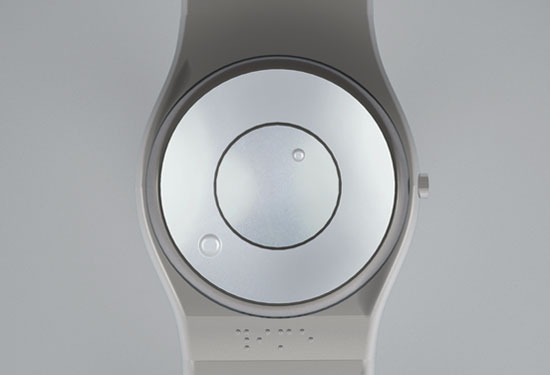
A Braille wristwatch?


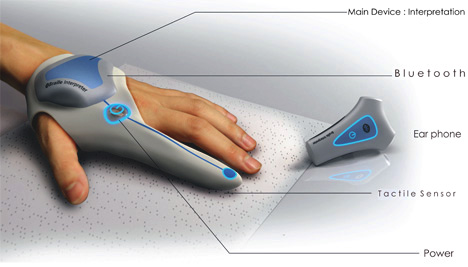
BabelBraille?


Or, better yet, learn to write in Braille for a cheaper printer!


UofT technology?!

There's also the traditional Braille desktop embosser printers (to translate, say, a Microsoft Word document into Braille).


How about saving the paper and having a Braille E-book reader?


http://www.engadget.com/2009/03/31/researchers-develop-braille-for-vibrating-touchscreen/


Ummm, is it just me, or is there absolutely no point to have this thing so big? Couldn't the Braille E-book reader be the size of only one or two cells? Just have them refreshing at a rate controlled constant by the reader? Sort of like an morse code signal but more space-time efficient? This would be a fantastic way to miniaturize any book. Time to start learning Braille...

I suppose this idea (of having the page move under the finger, and not vice-versa) could technically apply to a traditional E-book reader as well. Perhaps this was already tried? There must be (?) a psychological familiarity thing intertwined with the "old technology" of a page of words presented infront of you, rather than having them spin and change under your stationary eyes...

Bike redesign


Wytze says that “it is maintenance free, it has an efficiency of 96% (compared to 98% chain efficiency). It works.” The hole in the bottom bracket is visually striking, but it had another purpose in the design; “it is the legacy of the idea to give the customer the option to fit the bike aftermarket with an electric pedal assist.

http://bicycledesign.blogspot.com/2009/11/cannondale-dutchess-follow-up.htm

How does the LHC actually look?

Well, after learning from Pippa how the detector center worked and looked (in theory):


The Boston.com has some fantastic photos.


The second best way around...


Detail of some of the damage done to the LHC magnets in sector 3-4 on September 19th, 2008. (Maximilien Brice, © CERN)


The silicon strip tracker of the Compact Muon Solenoid (CMS) nears completion. Shown here are three concentric cylinders, each comprised of many silicon strip detetectors (the bronze-coloured rectangular devices, similar to the CCDs used in digital cameras). These surround the region where the protons collide. (© CERN)


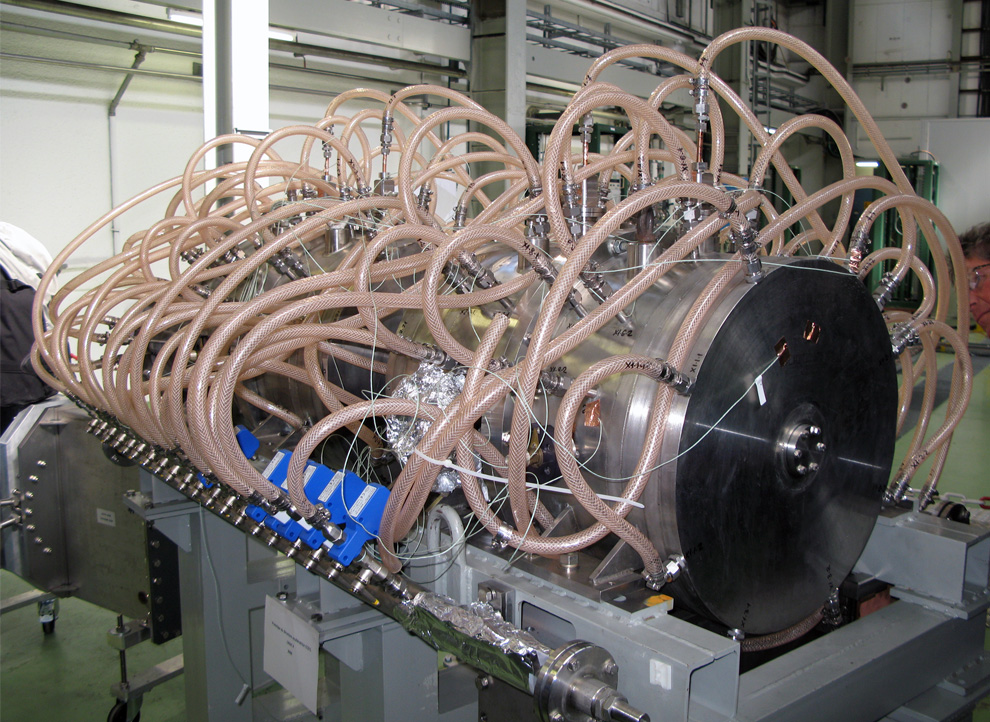
A radiofrequency chamber of the LHC. Radiofrequency chambers give a kick to the protons once per circuit to increase their speed. Original here. (Wikimedia user Rama / CC BY-SA)

How making money with music is finally changing


It's really not a very good graph (click to enlarge).

But, what it's saying is this...

We’ve all heard that the music business is changing, and here, from The Times Online, is a chart to prove it. The red line at the top is the revenue from sales of recorded music. The light green line below that is the revenue from live music. The dark green line below that, “PRS revenue,” is the revenue from royalties.

Basically there’s more and more money being spent on live shows and, consequently, more money going to artists themselves. At the same time the labels are being squeezed out of the equation because sales of recorded music are falling.

The Times adds:

It’s interesting too that, overall, industry revenues have grown in the period—though admittedly not by much—which arguably adds strength to the notion that, when the BPI releases its annual report claiming how much ‘the music industry’ has suffered from the growth in illegal file-sharing, what it perhaps should be saying is how much the record labels have suffered. For other people in the industry, not least artists, the future arguably holds more promise.


(via Good)

Yes guy!

The Dutch Try a Kilometer Tax


The Dutch have done something innovative. They’re replacing the sales and ownership taxes on cars with a tax based on the amount people drive.

“Each vehicle will be equipped with a GPS device that tracks how many kilometres are driven and when and where. This data will be then be sent to a collection agency that will send out the bill,” the transport ministry said in a statement.

…Dutch motorists driving a standard family saloon will be charged 3 euro cents per kilometre (seven US cents per mile) in 2012. That would increase to 6.7 cents (16 US cents per mile) in 2018, according to the proposed law.

Here’s some quick math to translate. As recently as 2005, the average American had a commute of 33 miles. That’s about 53 kilometers. That would translate to a daily tax of 1.53 Euros, or $2.28. That adds up quickly. If this kind of tax were instituted in America, the average commuter would be paying an extra $11 each week. That’s more than $500 each year.

This kind of plan has been proposed here, too. It’s been talked about in Oregon and considered by Secretary LaHood. The nice thing about a mileage (or kilometer) tax is that it internalizes the some of the external costs of driving thereby encouraging people to drive less. It also links the money we use for infrastructure upkeep with the actual use of our roads and highways.

But a mileage tax, unlike a gas tax, doesn’t encourage people to drive cleaner cars. It adds a cost to driving based on the distance, not the carbon. A Tesla and a Hummer are taxed the same. The smarter plan—especially given the cost and privacy concerns associated with all of those GPS devices—might be to raise the gas tax or design a new one that’s a little more innovative than the current flat gas tax.

(copied basically exactly from Good)

Dandelion Salad


94 year old cook and great grandmother, Clara, recounts her childhood during the Great Depression as she prepares meals from the era. Learn how to make simple yet delicious dishes while listening to stories from the Great Depression.

From the Leaf Lady:

According to the USDA Bulletin #8, "Composition of Foods" (Haytowitz and Matthews 1984), dandelions rank in the top 4 green vegetables in overall nutritional value. Minnich, in "Gardening for Better Nutrition" ranks them, out of all vegetables, including grains, seeds and greens, as tied for 9th best. According to these data, dandelions are nature's richest green vegetable source of beta-carotene, from which Vitamin A is created, and the third richest source of Vitamin A of all foods, after cod-liver oil and beef liver! They also are particularly rich in fiber, potassium, iron, calcium, magnesium, phosphorus and the B vitamins, thiamine and riboflavin, and are a good source of protein.

These figures represent only those published by the USDA. Studies in Russia and Eastern Europe by Gerasimova, Racz, Vogel, and Marei (Hobbs 1985) indicate that dandelion is also rich in micronutrients such as copper, cobalt, zinc, boron, and molybdenum, as well as Vitamin D.

Much of what dandelions purportedly do in promoting good health could result from nutritional richness alone. Vogel considers the sodium in dandelions important in reducing inflammations of the liver. Gerasimova, the Russian chemist who analyzed the dandelion for, among other things, trace minerals, stated that "dandelion [is] an example of a harmonious combination of trace elements, vitamins and other biologically active substances in ratios optimal for a human organism" (Hobbs 1985).

Here's the raw nutritional value.

Clara's entire series is available on youtube (the Poorman's meal also looks great!).

(Via BoingBoing)

The end of flag football

Until next Spring!...


Andre Williams and The Sadies


Andre Williams (from Allmusic)

Zeffrey "Andre" Williams has worn many musical hats during his long career: recording artist, songwriter, producer, road manager, and so on. The Father of Rap was born November 1, 1936, in Chicago, IL, and was raised in a housing project by his mother, who died when Williams was six years old.

Doing his Fortune (records) stint, Williams kept busy playing the popular clubs in Detroit and other locales, including the Flamingo Club in Memphis, TN. His biggest solo hit, "Bacon Fat," occurred during a drive to Memphis' Flamingo Club. When he got back to Detroit he persuaded Devora Brown to book a session. Fortune's recording studio was in the back room of a record shop the Browns owned. "Bacon Fat" was Williams' third single for Fortune; he didn't even have the lyrics written, but hurried and did so on a napkin while Devora busied herself setting up the studio mikes.

Here's Bacon Fat:


Williams was still associating with Motown when he masterminded "Shake a Tail Feather" for the Five Dutones and "Twine Time" for Alvin Cash & the Crawlers, on George Leaner's Onederful Records in Chicago.

Williams now lives in Queens, NY, and is back active in the business of music. He performs at much better venues then he did during his Jail Bait years, and still dazzles audiences with his swagger and loud pimpish wardrobe. He released more albums in the '90s than he did during the first 40 years of his career, including Silky and Directly from the Streets. The Black Godfather and Fat Back & Corn Liquor followed in 2000.

Here's Andre and The Sadies in Chicago:

Thursday, November 19, 2009

First universal programmable quantum computer unveiled

http://www.newscientist.com/article/dn18154-first-universal-programmable-quantum-computer-unveiled.html


... with an accuracy of only 79 per cent... The experimental device uses beryllium ions to store qubits in the way they spin while the laser-pulse quantum gates perform simple logic operations on the qubits. The trick to making a quantum logic gate is in designing a series of laser pulses that manipulate the beryllium ions in a way that processes information. Another laser then reads off the results of the calculations.

Monday, November 16, 2009

Dock Ellis' no-hitter - seriously?

From Boingboing: We've posted before about Dock Ellis. He was the baseball player who in 1970 pitched a no-hitter for the Pittsburgh Pirates while tripping balls on LSD. Ellis died last year. In his honor, James Blagden and Chris Isenberg animated Ellis's retelling of his acid adventure on the mound. "Dock Ellis's Legendary LSD No-Hitter animation" (Dangerous Minds)

http://www.huffingtonpost.com/2009/11/13/dock-ellis-lsd-no-hitter_n_357351.html

Ellis remained calm. The game would start late. Ample time for the acid to wear off. Then it struck him: doubleheader. The Pirates had a doubleheader. And he was pitching the first game. He had four hours to get to San Diego, warm up and pitch. If something didn't happen in the interim, Dock Philip Ellis, age 25, was about to enter a 50,000-seat stadium and throw a very small ball, very hard, for a very long time, without the benefit of being able to, you know, feel the thing.


Dock's box score (click to enlarge):