Friday, September 4, 2009

Digital Synesthesia


I wrote about synesthesia here before, where some people have senses and experiences neurologically intertwined (days of the week induce a colour vision, musical chords each have a specific taste and flavour). This project, reminiscent of the Northern Exposure episode where Chris designs a machine to help him live out lucid dreams seems very ambitious, but also a very cool first step.

http://www.good.is/post/digital-synesthesia/

This is a really great article (stuff on good.is is generally pretty interest.. ). The idea that everything is programmable is certainly not new... I mean, we program our minds and thoughts based on inputs everyday. Moreover, this programming (and reprogramming) can be specifically controlled and manipulated.

"For example, there are the “Flavor Tripping” parties fueled by Synsepalum dulcificum, aka “Miracle Fuit,” the West African berry that temporarily reprograms your taste buds to make anything sour or bitter taste perfectly sweet. And there’s the story of Daniel Kish, the blind psychologist who, by clicking his tongue, uses echolocation to “see.” In the realm of digital synesthesia, numerous projects are attempting to leverage tactile feedback in the form of clothing outfitted with tiny vibrators. Instead of picking up your phone to read a text message, you might feel the words spelled on your back.

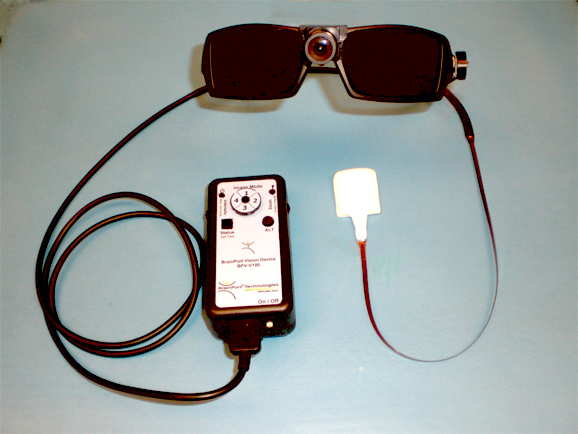
The late Paul Bach-y-Rita could be considered the father of all technology used to reprogram the human senses. In 1963, Bach-y-Rita developed a “Tactile to Visual Sensory Substitution” device. It converted images from a camera to tactile sensations that a blind person could feel on his or her back. Bach-y-Rita’s research was all based on the notion of “sensory substitution.” The brain, he argued, was not hardwired and that a working sense, say touch, could be used to replace a failing one, e.g. vision. His ideas around the plasticity of the human brain were very controversial at the time but widely accepted today. He continued his research on sensory substitution technology at the University of Wisconsin-Madison, and his company Wicab, until his death in 2007.

“I can connect anything to anything,” Bach-y-Rita said in a profile in The Telegraph shortly before his death:

We see with our brains, not with our eyes. When a blind man uses a cane he sweeps it back and forth, and has only one point, the tip, feeding him information through the skin receptors in the hand. Yet this sweeping allows him to sort out where the doorjamb is, or the chair, or distinguish a foot when he hits it, because it will give a little. Then he uses this information to guide himself to the chair to sit down. Though his hand sensors are where he gets the information and where the cane “interfaces” with him, what he perceives is not the cane’s pressure on his hand but the layout of the room: chairs, walls, feet, the three-dimensional space. The receptor surface in the hand becomes merely a relay for information, a data port.

In the latest incarnation of Bach-y-Rita’s work, the data port is the tongue...."

Drinking and biking..

I'm refraining from commenting on the Bryant-Sheppard situation, mostly cuz it doesn't seem like anyone is sure what exactly happened yet. One good article to come out of this is Adam's..

http://www.theglobeandmail.com/blogs/radwanski/drinking-and-biking/article1274956/


"The very notion that police would have sent Sheppard on his merry way in a car after he'd been drinking is unthinkable. Maybe it should be no less unthinkable that he'd have been sent off on a bike."

I agree with you, and leaving the bike at home/locked up on the street overnight is something that I'm gonna start doing. It's really about taking responsibility, and there's no point to take needless risks.


Nice new head shot Adam, and congrats again on the new job.


Thursday, September 3, 2009

Save the date!

Keynote Public Lecture: How to Find a Habitable Planet

The Department of Astronomy and Astrophysics Free Public Tour is happy to announce a special tour in September. A series of events will take place on the St. George campus, including original songs of space and space flight, presented by the Filk Society, a public talk, telescope tours, and a free movie screening.

September 26, 2009 9:10 PM Speaker: Prof. David Charbonneau

Schedule:

6:30 - 7:20 Filk music
7:30 - 8:55 Public lecture, followed by a Q&A session and refreshments.
9:10 - 10:00 Hawaiian Starlight / First observing session
10:00 - 12:00 Second observing session

About filk:

What is filk? What kind of music is it? Here are some answers.

Free movie screening:

Hawaiian Starlight, a film by Jean-Charles Cuillandre. Watch trailer1 and trailer2.

Observing sessions:

We offer observing sessions through our 4 telescopes. Meanwhile we also offer a virtual sky tour and a screening of astronomy shorts. An astronomer will be on site to answer your questions about the Universe as well. Don’t miss “Ask an Astronomer”!

Public talk abstract:

For centuries humans have gazed up at the stars and wondered whether there be life on worlds other than our own. We are fortunate to live at the moment in history when, for the first time, we have the technological ability to answer that question. In the past decade astronomers have uncovered hundreds of worlds orbiting nearby stars, and developed the methods necessary to understand the chemical make-up of their atmospheres. However, those studies have so far been restricted to large gas giant planets like Jupiter that are unlikely abodes for life. Several observatories deployed only in the past year offer the very real opportunity to detect far smaller, rocky worlds similar to the Earth. Once identified, we will probe the atmospheres that enshroud these distant orbs for chemical evidence of biological activity on the surface below.

Speaker’s mini bio:

David Charbonneau is the Thomas D. Cabot Associate Professor of Astronomy at Harvard University. His research focuses on the development of novel techniques for the detection and characterization of planets orbiting nearby stars. As a graduate student, he used a 4-inch telescope to make the first detection of an exoplanet eclipsing its parent star, which yielded the first ever constraint on the composition of a planet outside the Solar system. Dr. Charbonneau also pioneered the use of space-based observatories to undertake the first studies of the atmospheres of these distant worlds. He is currently leading the MEarth Project and is a member of the NASA Kepler Mission Team. Each of these projects aims to detect Earth like planets that might be suitable abodes for life beyond the Solar system. Dr. Charbonneau was recently awarded NASA's Exceptional Scientific Achievement Medal and the US National Science Foundation's Waterman Award, and in 2007 he was named Scientist of the Year by Discover Magazine.

http://www1.astro.utoronto.ca/~gasa/public_talk/iWeb/Whats_Up/Entries/2009/9/26_How_to_Find_a_Habitable_Planet.html

Not sure if I'll stick around for the movie, but those first two events sounds pretty awesome.

Dan's cottage


Wednesday, September 2, 2009

Song of the day: Joel Plaskett - Lazy bones.

Do yourself a favour and read the lyrics while listening/singing along.
This song is phenomenal.

ps. It has nothing to do with lazy bones..., in the traditional sense.

LAZY BONES

Slow it down, just for a while
Drag it out for a couple of miles
Don’t spend tonight out on the tiles
You need to sleep, you need to dream
You need to slip into places unseen
Slide into space with the snow on the screen

Lazy bones, that’s what they’ll say
But you don’t need to make a dime today
Lazy bones, that’s what they’ll think
Just stand on the shore and watch ‘em sink

You can float and you can fly
Like branches and boats and birds in the sky
Beyond the beyond, leave your troubles behind
And when you awake in the middle of the night
Sleep in your eyes, no one in sight
Come knock on my window, I’ll leave on the
Light of your life, life of your own
Light on your feet, feeling alone
Light up the sky, why would you fight?
Under the stars that light up your night
Taking your time, making your way
Taking your breath, pacing your day
Waving your hands from your hazy home

Lazy bones, that’s what they’ll say
But you don’t need to make a dime today
Lazy bones, that’s what they’ll think
Just stand on the shore and watch ‘em sink

Lazy bones, don’t be afraid
Of your place in the sun, of the choices you made
The game that they’re playing doesn’t have to be played
They think this rock was meant to be rolled
And the time that they bought was meant to be sold
Come on, turn ‘em all off, turn lead into gold

Lazy bones, look at you now
Made in the shade and taking a bow
Lazy bones, that’s what they’ll think
Just stand on the shore and watch ‘em sink.

Live in Edmonton, Ab.


Live song of the day: Questionable people!

This guy is too much! It's not quite acoustic (no drums, bass, anything else), but it's just an electric guitar with his unbelievable back up singers.

Tuesday, September 1, 2009

Ken Burns' The National Parks: America's Best Idea


As you all probably know, Ken Burns makes excellent documentaries. Mostly about war, music and baseball, Burns is changing themes and going green (although the pan & zoom he made famous I'm sure will serve him well here). Still with a slant on history, "The National Parks: America's Best Ideas" I'm sure is going to be trip inspiring, and is coming to PBS in a 6-part series September 27th.

http://sierraclub.org/parks/

I'll post up torrent links here a few days after episodes air...


09.09.30: UPDATE here. No torrent yet, but watch to your heart's content, free until October 9th...

More bikers = increased safety.


From the Atlantic.

http://business.theatlantic.com/2009/08/why_bike-sharing_programs_are_really_good_ideas.php

The number of reported accidents goes down as the ridership increases (ummm... stating the obvious much? I apparently wrote this for those of you can't read graphs ;) .

NYC seems to have improved their infrastructure significantly over the last few years, which may also be a contributing factor, but internationally, it seems to be working two fold; increasing ridership and safety. Correlationally, at least...

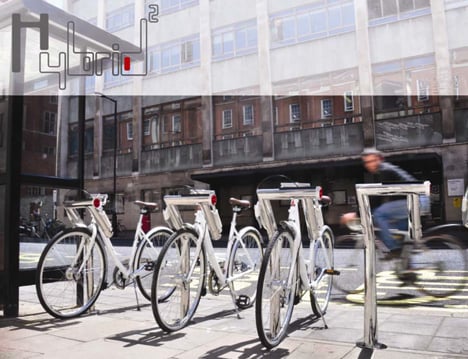
Bike share system that gives energy to the city.


Like, actually feeds back energy to the grid (in addition to the revitalization aspect of it all!)

http://www.engadget.com/2009/07/16/hybrid2-public-bike-concept-promises-to-help-power-city-buses/


... the hybrid part of the bike (a regenerative braking system) wouldn't be used to help power the bike itself at all, but would instead store the energy in an ultracapacitor that'd then feed the energy back into the grid when its parked at a special bike stand, which would in turn be used to help charge the hybrid electric buses. Not one to overlook an ingenious little detail, Chen has also devised a special card RFID card that would not only be used to unlock the bike, but keep track of the energy that each rider generates -- build up enough credits and you can ride the bus for free.

Monday, August 31, 2009

Canoe to the water

This summer I decided that since I don't have any camping trips planned (?!), getting out on lake Ontario may be the next best thing. Although I do have access to a vehicle, it's fairly inconsistent, and it's a different vehicle almost every time. No guaranteed racks either. So, I got one of these. I wrote a short review for Dandyhorse mag, but it got cut from the current issue. I'll post it at the bottom if you're interested; it's a cool system with a few minor problems... Nothing that can't be improved upon.

The day was great, but didn't end up going to the Toronto Island as originally planned because (a) we started a bit late, (b) the water outside the breakers was just too choppy that day.


Wondering where a good place to launch at is? From the west end I dipped in near the Palais Royale, but for a trip out to the island it's a bit of a distance. Next time closer to the downtown core...


Two bikes, two people, the trailer and a lunch easily fit.


This summer I decide to go multi-modal -- using my canoe! The only question was, how to get to the water easily while potentially staying carbon neutral.

Then I found the Wike Woody Wagon bicycle trailer ($199, www.wicycle.com). Well padded and fully equipped, it comes complete with everything I needed to haul my canoe on my bike from home to lake safely and easily.

The trailer is actually composed of two separate main components, with the wheels detached from the yoke. This design not only contributes to its light weight (13 lbs), but also allows for flexibility in cargo size.

I found it a cinch to put together, and once I hooked the trailer with canoe to my bike, easy to maneuver as I rode down to the lake. The only potential long term issues are the rubber quick-connect stem (instead of a more durable metal swivel) and low-quality aluminum (which is already showing signs of stress after only two uses).

Finally, although you can't ride with the kit unloaded behind you (for instance, if you wanted to pick up your canoe at another location) because it is a two-piece set, once at the lake the trailer is dismantled in seconds and can be ferried in the canoe (with your bike!) while enjoying the entirely car-free day on the water.

Friday, August 28, 2009

Oasis have broken up.


http://www.nme.com/news/oasis/47001

Noel Gallagher quit Oasis tonight (August 28).

"It's with some sadness and great relief to tell you that I quit Oasis tonight," he wrote. "People will write and say what they like, but I simply could not go on working with [singer, his brother] Liam a day longer."

More on this later. I was never good at crying and typing.

Update: http://news.bbc.co.uk/2/hi/entertainment/8228687.stm

Mr McGee said Noel no longer felt any obligation to stay in the band, which reflects a wider shift in society, he believes.

"Whether you're an electrician or a rock 'n' roll star, you can only do and be who you want to be," he said.

"He is the same as everybody else - he didn't want to do it any more and he stopped. People don't do anything now that they don't want to do."