


 Posts
Posts


14 years ago
Friday, February 12, 2010
Cancer?

Eat above to starve cancer.
In autopsies of people who died in car accidents, doctors have found microscopic cancers in 40% of woman (breast) and 40% of men (prostate). Something like 70% of older people have microcancers in their thyroid. But the cancer is harmless -- "cancer without disease." If you block angiogenesis the cancer can't grow. "It's a tipping point between harmless cancer and deadly one."
Li showed a photo of a poor dog with gnarly tumor hanging off its side. The vet gave the dog three months to live. They started antiangiogenesis drugs. In a few weeks, the tumor shrank away completely. They also cured a dolphin of mouth cancer and saw a complete remission of a deadly lip cancer on a horse.
Today there 12 different antiangiogenesis drugs available for people and dogs. They are quite effective for many cancers, but not much for liver, lung, and breast cancers. The problem with these cancers is that by the time they are detected they have progressed too far for antiangiogenesis drugs to do their work.
The good news, Li says, is that "we eat to starve cancer." Lots of foods contain naturally occuring inhibitors of angiogenesis, and many are even better than drugs for blocking angiogenesis (see image above).
http://www.boingboing.net/2010/02/10/highlights-from-ted.html
Thursday, February 11, 2010
Song of the Day: The Hidden Cameras - I Believe in the Good of Life
I believe in the good of life as I kneel for a taste of man
I believe in the taste of wine as I do not step on a land mine
I believe in the good of life as I kneel for a taste of man
I believe in the taste of wine as I do not step on a land mine
I'll testify on the word of a radio that I dream of the fate of democracy, as I flee on my bike from the crimes we made, and that I did not do those drugs or steal those army pants.
I believe in the good of life as I plead for a taste of man
I'm thirsty for a taste of wine as I do not step on a land mine
I'll testify on the word of a radio that I dream of the fate of democracy, as I flee on my bike from the crimes we made, and that I did not do those drugs or steal those army pants.
I believe in the good of life as I plead for a taste of man
I'm thirsty for a taste of wine as I do not step on a land mine
I'll testify on the word of a radio that I dream of the fate of democracy, as I flee on my bike from the crimes we made, and that I did not do those drugs or steal those army pants.
I believe in the good of life as I plead for a taste of man
I'm thirsty for a taste of wine as I do not step on a land mine
I believe in the good of life
Hand claps.
Entanglement Energy

Remember the quantum theory of entanglement?
Well, new implications have just come to light, so to speak.
http://www.technologyreview.com/blog/arxiv/24759/ (via Geekpress)
But Masahiro Hotta at Tohoku University in Japan has come up with a much more exotic idea. Why not use the same quantum principles to teleport energy?
Today, building on a number of papers published in the last year, Hotta outlines his idea and its implications. The process of teleportation involves making a measurement on each one an entangled pair of particles. He points out that the measurement on the first particle injects quantum energy into the system. He then shows that by carefully choosing the measurement to do on the second particle, it is possible to extract the original energy.
All this is possible because there are always quantum fluctuations in the energy of any particle. The teleportation process allows you to inject quantum energy at one point in the universe and then exploit quantum energy fluctuations to extract it from another point. Of course, the energy of the system as whole is unchanged.
There is a growing sense that the properties of the universe are best described not by the laws that govern matter but by the laws that govern information. This appears to be true for the quantum world, is certainly true for special relativity, and is currently being explored for general relativity. Having a way to handle energy on the same footing may help to draw these diverse strands together.
Matter, building blocks are everywhere. Information is the key. It's weird to think, but makes total sense at the same time. We're all made up of the same things; we're just full of different information and arranged differently. Just like transferring information through maps, people can visit the exact same spot at different times. Likewise, and perhaps trivially so, but related to the point of instant information transfer, you can know that given a certain exact time, where or what I am doing if that information is passed instantly, or even before hand. Furthermore, given all the information that you possess in your body, it can theoretically be recreated somewhere else.
This isn't a new idea, but I believe this may have been the first time that energy has been transferred in non-classical ways; by sending information from point A to point B, and then processing this information at point B, and then rearranging point B building blocks to rebuild what there was originally at point A. This isn't a copy either; the system does not gain or lose any energy, it's just transferred, through information.
This reminds me of the article posted by Jeremy: ‘A free society requires access to the facts’.
Scotch on the Rocks, part 2
Remember that Shackleton story a few months ago? How they were going to drill 200 kms outside the South Pole to recover some of Shackleton's buried Scotch Whiskey? Well, it looks like they got it. Along with a little extra brandy.
http://news.bbc.co.uk/2/hi/uk_news/scotland/8499931.stm

Richard Paterson, whose firm supplied the Mackinlay's whisky for Shackleton, said: "If the contents can be confirmed, safely extracted and analysed, the original blend may be able to be replicated.
"Given the original recipe no longer exists this may open a door into history."
The alcohol was removed from the ice by the New Zealand Antarctic Heritage Trust, which had initially believed there to be just two crates.
This is gonna soon be marketed to high hell, and I will buy some.
http://news.bbc.co.uk/2/hi/uk_news/scotland/8499931.stm
Richard Paterson, whose firm supplied the Mackinlay's whisky for Shackleton, said: "If the contents can be confirmed, safely extracted and analysed, the original blend may be able to be replicated.
"Given the original recipe no longer exists this may open a door into history."
The alcohol was removed from the ice by the New Zealand Antarctic Heritage Trust, which had initially believed there to be just two crates.
This is gonna soon be marketed to high hell, and I will buy some.
Wednesday, February 10, 2010
The Southwest, part 2
This leg of the trip was highlighted by the Grand Canyon, although Williams AZ was an awesome morning, and although Santa Fe started weird and slow, we had a great evening there as well.
On with the photos!
Early morning reflection.

As mentioned previously, Williams was our first exposure to old Route 66, so we kinda went camera and shop crazy. The town is really small, but we must have spent an hour just walking around...


I was really tempted. I figure that just goes on the 'to make' list.


Off in the car again. The Grand Canyon is about an hour north of Williams (vs. about 1.5 hours outside of Flagstaff). Although Flagstaff is nice, Williams seems to be the better bet on places to stay within striking distance of the Canyon.

Just sleeping. He wasn't there on our way back.

Now at the GC, there was tonnes of snow, and very little tourists. It really did seem to be the perfect time to visit.


The snow really helps with the depth definition.


We really got some great shots of the Canyon just walking around... if you find yourself near the South Rim of the Canyon, drive.walk.bike up the steep entrance to El Tovar hotel (Einstein once stayed there!), as suggested to us by a friendly lady as we were U-turning onto a one way street near the community centre there. Once there, access to the GC is unfenced, direct and spacious, and the contours in this particular spot are great as well.


Not the best shot. In Williams one could hop on the Grand Canyon Railway and 2.5 undoubtedly scenic hours later would be dropped off steps from the advertised. It really is a full day trip, there and back, and thought it better to leave that for a second visit.

There were no bikes on the road, but signs were everywhere and ready for the spring.

After spending about an 1. 5 hours just walking, talking and taking pictures, we decided to at least try to take a helicopter ride over the giant hole.
Adam dove into the airport, and found that just down the street Papillon offered 30 minute flights for $150 each. Since I've never been in a helicopter (and Adam only once before), we thought this would be the perfect opportunity. Also, it was taking off in like 5 minutes.

We sat with a couple of others, and window access was full. There was unfortunately no "Danger Zone" played over the headsets, although Adam commented that it did sound like it was about to come on at one point. We just sang it a cappella in the car afterward. No, seriously, we were jacked.

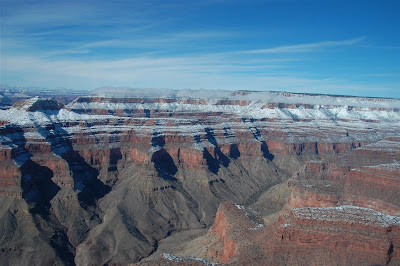
We got lucky with the low hanging clouds, and with the weather in general. These small pictures don't really do the size of the Canyon justice, but you could figure that.
I could bore you with about 50 more of these, but I figure I'd have to sedate you with booze first. In saying that, plans can be arranged.
.


Once landed, Adam was told to take off.
It was a great experience. There is some video archived as well, but I'll save that for another time...
The Grand Canyon was pretty awesome, and a one night Las Vegas / one night Grand Canyon getaway would be very much be worth it (and relatively cheap), especially if you've never been. It is something that you need to experience with someone else, and sharing that gaping hole with Adam was unique, and something very special to me.
So, back on the road now, and looking to head to Santa Fe before it gets too late.

The round trip from Williams to the Grand Canyon to Santa Fe is about 530 miles.
For lunch, we stopped at Charly's in the lovely Weatherford Hotel, Flagstaff, AZ.


err... different hotel.

Flagstaff, where they will tow your dog.

Cholla Power Plant. Absolutely disgusting, and can be seen for approximately 50 miles around. Located on the man-made Cholla Lake, which slightly bubbles as it cools the refuse from the power generator.
View Larger Map
I figure that big black spot over the power plant is the smoke. Apparently none of the power generated here stays in Arizona; it gets sold to California and Oregon. Apparently there are some carbon capture studies being done now at Cholla, but this thing is just plain disgusting.
Well, on to better things. Apparently we're approaching Knife City!


.. and Goodwater. The town with no services.

Ladies and gentlemen, I present to you Goodwater, Arizona. You just missed out on owning this no service town. The 600 acre property sold recently for just under $800,000. The headquarters improvements consists of a mobile home, concrete bunkhouse, a large hay/livestock barn, and several out buildings. Telephone and electricity are available to the headquarters site.


Apparently updated just a few days ago, isitconstitutional.com


A rest stop just inside the New Mexico borders. I liked the bench, and didn't like the facilities.

I really can't add to the perfection of this picture.

SO, arrived in Santa Fe; it must have been somewhere around 10 pm. The place looked dead, except for a handful of pockets around the Plaza. Maybe it was just too cold? Above, Adam is about to sample his first chiles rellenos of the trip at the Inn of the Governors' Del Charro Saloon, where the house margarita is cheap, sweet, and plentiful.


Empty Plaza at night; too cold?

I'm sure Santa Fe is a great town with some great culture, but to me, it turned out to be the only disappointing town visited on the trip. Maybe I hyped it too much in my head. Being there for basically 15 hours overnight, it didn't really strike a chord (more pictures are coming from the next day...), but probably didn't get its fair shake either. It would be interesting to go back there in warmer climates, but honestly, it does feel a bit too much like a tourist town for Americans to visit the southwest. We're Canadians. It just never really was going to work out. I think Adam described it as Disneyland's southwest outpost, and I agree.
However, it's not just about the sights, the architecture, or the towns. It's also about the people you meet, and the stories you share. The picture above is us with our favourite Santa Fe bartender, Aaron. Although we had our pick from a few (if you ever go to Evangelo's make sure the bartender is in a good mood(!); that may have stemmed from us being the only ones in the bar), I think what sold us most with Aaron was his easy pours, local Catamount and ex-wife gossip, at 3am.
See part 1 here.
On with the photos!
Early morning reflection.

As mentioned previously, Williams was our first exposure to old Route 66, so we kinda went camera and shop crazy. The town is really small, but we must have spent an hour just walking around...


I was really tempted. I figure that just goes on the 'to make' list.


Off in the car again. The Grand Canyon is about an hour north of Williams (vs. about 1.5 hours outside of Flagstaff). Although Flagstaff is nice, Williams seems to be the better bet on places to stay within striking distance of the Canyon.

Just sleeping. He wasn't there on our way back.

Now at the GC, there was tonnes of snow, and very little tourists. It really did seem to be the perfect time to visit.


The snow really helps with the depth definition.


We really got some great shots of the Canyon just walking around... if you find yourself near the South Rim of the Canyon, drive.walk.bike up the steep entrance to El Tovar hotel (Einstein once stayed there!), as suggested to us by a friendly lady as we were U-turning onto a one way street near the community centre there. Once there, access to the GC is unfenced, direct and spacious, and the contours in this particular spot are great as well.


Not the best shot. In Williams one could hop on the Grand Canyon Railway and 2.5 undoubtedly scenic hours later would be dropped off steps from the advertised. It really is a full day trip, there and back, and thought it better to leave that for a second visit.

There were no bikes on the road, but signs were everywhere and ready for the spring.

After spending about an 1. 5 hours just walking, talking and taking pictures, we decided to at least try to take a helicopter ride over the giant hole.
Adam dove into the airport, and found that just down the street Papillon offered 30 minute flights for $150 each. Since I've never been in a helicopter (and Adam only once before), we thought this would be the perfect opportunity. Also, it was taking off in like 5 minutes.

We sat with a couple of others, and window access was full. There was unfortunately no "Danger Zone" played over the headsets, although Adam commented that it did sound like it was about to come on at one point. We just sang it a cappella in the car afterward. No, seriously, we were jacked.


We got lucky with the low hanging clouds, and with the weather in general. These small pictures don't really do the size of the Canyon justice, but you could figure that.
I could bore you with about 50 more of these, but I figure I'd have to sedate you with booze first. In saying that, plans can be arranged.
.


Once landed, Adam was told to take off.
It was a great experience. There is some video archived as well, but I'll save that for another time...
The Grand Canyon was pretty awesome, and a one night Las Vegas / one night Grand Canyon getaway would be very much be worth it (and relatively cheap), especially if you've never been. It is something that you need to experience with someone else, and sharing that gaping hole with Adam was unique, and something very special to me.
So, back on the road now, and looking to head to Santa Fe before it gets too late.

The round trip from Williams to the Grand Canyon to Santa Fe is about 530 miles.
For lunch, we stopped at Charly's in the lovely Weatherford Hotel, Flagstaff, AZ.


err... different hotel.

Flagstaff, where they will tow your dog.

Cholla Power Plant. Absolutely disgusting, and can be seen for approximately 50 miles around. Located on the man-made Cholla Lake, which slightly bubbles as it cools the refuse from the power generator.
View Larger Map
I figure that big black spot over the power plant is the smoke. Apparently none of the power generated here stays in Arizona; it gets sold to California and Oregon. Apparently there are some carbon capture studies being done now at Cholla, but this thing is just plain disgusting.
Well, on to better things. Apparently we're approaching Knife City!


.. and Goodwater. The town with no services.

Ladies and gentlemen, I present to you Goodwater, Arizona. You just missed out on owning this no service town. The 600 acre property sold recently for just under $800,000. The headquarters improvements consists of a mobile home, concrete bunkhouse, a large hay/livestock barn, and several out buildings. Telephone and electricity are available to the headquarters site.


Apparently updated just a few days ago, isitconstitutional.com


A rest stop just inside the New Mexico borders. I liked the bench, and didn't like the facilities.

I really can't add to the perfection of this picture.

SO, arrived in Santa Fe; it must have been somewhere around 10 pm. The place looked dead, except for a handful of pockets around the Plaza. Maybe it was just too cold? Above, Adam is about to sample his first chiles rellenos of the trip at the Inn of the Governors' Del Charro Saloon, where the house margarita is cheap, sweet, and plentiful.


Empty Plaza at night; too cold?

I'm sure Santa Fe is a great town with some great culture, but to me, it turned out to be the only disappointing town visited on the trip. Maybe I hyped it too much in my head. Being there for basically 15 hours overnight, it didn't really strike a chord (more pictures are coming from the next day...), but probably didn't get its fair shake either. It would be interesting to go back there in warmer climates, but honestly, it does feel a bit too much like a tourist town for Americans to visit the southwest. We're Canadians. It just never really was going to work out. I think Adam described it as Disneyland's southwest outpost, and I agree.
However, it's not just about the sights, the architecture, or the towns. It's also about the people you meet, and the stories you share. The picture above is us with our favourite Santa Fe bartender, Aaron. Although we had our pick from a few (if you ever go to Evangelo's make sure the bartender is in a good mood(!); that may have stemmed from us being the only ones in the bar), I think what sold us most with Aaron was his easy pours, local Catamount and ex-wife gossip, at 3am.
See part 1 here.
meh.. just four great articles you should read...
They are all great reads, long and short, right in my wheelhouse, and after contemplating taking the credit, I must admit I stole them from Kari's google reader feeder.
----
Photographer Loves Math, Graphs Her Images

http://www.wired.com/magazine/2010/01/pl_arts_found/ for more pics.
Most of us can’t tell our secant from our cotangent. But the forms are everywhere, and Nikki Graziano wants to help us see them. See more of her Found Functions series at Nikkigraziano.com.
These look ok, but I really like the concept.
----
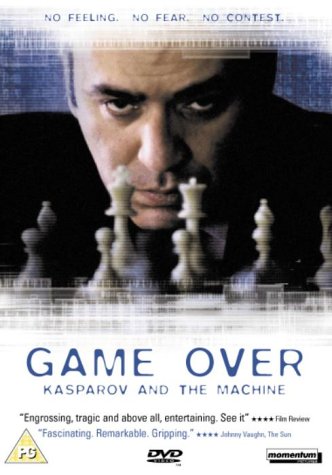
Garry Kasparov writes of artificial intelligence and chess. This is a really transparent article by Garry; his bitterness, his emotion, as well as his intellect really come through. You could almost feel the struggle within from paragraph to paragraph. If you haven't seen the movie, "Game over: Kasparov and the Machine", you should.
----

At the outset, this article looks "meh, pedestrian", but keep reading.
In Western films, the gunslinger that draws first always gets shot. This seems like a standard Hollywood trope but it diverted the attention of no less a scientist that Niels Bohr, one of history's greatest physicists. Taking time off from solving the structure of the atom, Bohr suggested that it takes more time to initiate a movement than to react to the same movement. Perversely, the second gunslinger wins because they're responding to their opponent's draw.
...
Bohr's idea, it seems, was correct in theory, but wrong in practice. That didn't stop Bohr himself from testing his hypothesis in experimental duels against fellow physicist George Gamow using toy pistols. According to anecdotal reports, Bohr always reacted and he won every duel, but Welchman has the final word on the matter:
"Our data make it unlikely that these victories can be ascribed to the benefits associated with reaction. Rather, they suggest that Bohr was a crack shot, in addition to being a brilliant physicist."
----
And finally, sing me Polish techno.
New York is practically a non-stop music festival, so it makes sense that the city doesn’t host many big-tent events. In ungenerous moments, New Yorkers may even think that nothing passes them by because everyone plays here. Not so—some musicians just don’t care for touring. But a well-curated festival can bring out those artists, and the seven-year-old Polish electronic-music festival Unsound, which comes to New York Feb. 4-14 (starting in and around Lincoln Center), is at least that. Vladislav Delay will offer his gorgeous electric fog, Radian will play its arid version of minimalist rock, and countless others, some rarely seen, will upend machines in search of the perfect beat. There will also be panel discussions with pioneers such as the seventy-six-year-old Morton Subotnick, one of the first musicians to work with modular synthesizers. You’ll have to admit that the Poles got this one right. Eleven days is a lot of synergy, and it seems unlikely that you will be standing in mud at any point.
From the New Yorker.
----
Now, the point of this post? So I could play you all this:
----
Photographer Loves Math, Graphs Her Images
http://www.wired.com/magazine/2010/01/pl_arts_found/ for more pics.
Most of us can’t tell our secant from our cotangent. But the forms are everywhere, and Nikki Graziano wants to help us see them. See more of her Found Functions series at Nikkigraziano.com.
These look ok, but I really like the concept.
----
Garry Kasparov writes of artificial intelligence and chess. This is a really transparent article by Garry; his bitterness, his emotion, as well as his intellect really come through. You could almost feel the struggle within from paragraph to paragraph. If you haven't seen the movie, "Game over: Kasparov and the Machine", you should.
----
At the outset, this article looks "meh, pedestrian", but keep reading.
In Western films, the gunslinger that draws first always gets shot. This seems like a standard Hollywood trope but it diverted the attention of no less a scientist that Niels Bohr, one of history's greatest physicists. Taking time off from solving the structure of the atom, Bohr suggested that it takes more time to initiate a movement than to react to the same movement. Perversely, the second gunslinger wins because they're responding to their opponent's draw.
...
Bohr's idea, it seems, was correct in theory, but wrong in practice. That didn't stop Bohr himself from testing his hypothesis in experimental duels against fellow physicist George Gamow using toy pistols. According to anecdotal reports, Bohr always reacted and he won every duel, but Welchman has the final word on the matter:
"Our data make it unlikely that these victories can be ascribed to the benefits associated with reaction. Rather, they suggest that Bohr was a crack shot, in addition to being a brilliant physicist."
----
And finally, sing me Polish techno.
New York is practically a non-stop music festival, so it makes sense that the city doesn’t host many big-tent events. In ungenerous moments, New Yorkers may even think that nothing passes them by because everyone plays here. Not so—some musicians just don’t care for touring. But a well-curated festival can bring out those artists, and the seven-year-old Polish electronic-music festival Unsound, which comes to New York Feb. 4-14 (starting in and around Lincoln Center), is at least that. Vladislav Delay will offer his gorgeous electric fog, Radian will play its arid version of minimalist rock, and countless others, some rarely seen, will upend machines in search of the perfect beat. There will also be panel discussions with pioneers such as the seventy-six-year-old Morton Subotnick, one of the first musicians to work with modular synthesizers. You’ll have to admit that the Poles got this one right. Eleven days is a lot of synergy, and it seems unlikely that you will be standing in mud at any point.
From the New Yorker.
----
Now, the point of this post? So I could play you all this:
Subscribe to:
Posts (Atom)