Accompanied by beautiful intricate drawings, seven innovative pop-ups reveal the inner workings of the experiment. There are many flaps to open and tabs to pull - the reader can even build their own pop-up ATLAS!
How does such a complex endeavour come to be? What are the challenges building and operating such a mind-boggling experiment? Three imaginative pop-ups show ATLAS in its underground cavern, the control centre on the surface and the tricky manoeuvring needed during installation.
The trailer above is for Between The Folds, a new feature documentary film presented by PBS's Independent Lens. You can view the whole film on PBS on December 8 (via Boingboing).
On a related note, here's a great talk by Robert Lang, from TED. Robert Lang is a pioneer of the newest kind of origami -- using math and engineering principles to fold mind-blowingly intricate designs that are beautiful and, sometimes, very useful.
By now you've probably heard that a bird caused a concern with LHC (no delay - the thing wasn't even on... just exposed a potential future problem). I'm not really posting about that.. just one of the great comments that followed a thread (via GeekPress)
--
The bird's briefing:
The approach will not be easy. You are required to maneuver straight down this trench and skim the surface to this point. The target area is only two meters wide. It's a small thermal exhaust port, right below the main port. The shaft leads directly to the reactor system. A precise hit will start a chain reaction which should destroy the station.
--
Anyway, kinda reminded me of a movie I watched over the weekend, Primer. Primer is a 2004 American science fiction film about the accidental discovery of time travel. The film was written, directed and produced by Shane Carruth, a mathematician and a former engineer, and was completed on a budget of $7,000. (via Wiki; don't read if you don't want the movie spoiled). Recommended by a friend, I ended up watching it 1.5 times to try to figure out the plot (with a little nap in between!). It's a pretty cool look at the old time travel paradoxes... and also a more realistic look (at least in my view.. ) at the more often than not serendipitous scientific discovery process. The process of new ideas and brain-storming seems to work the same way; by climbing that ladder through good teamwork and communication; bouncing ideas off each other "up the ladder". Anyway, off on a tangent there, but that's how I always pictured it.
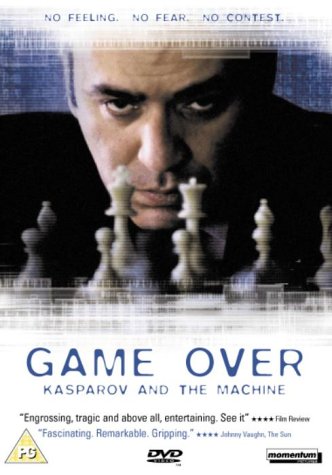
My interest in critical thinking games has spiked recently (probably cuz the law apps are in finally), specifically tower defense games, wordgames, and most recently chess and go. I watched the movie "Game Over: Kasparaov and the Machine" on a friend's recommendation, which kinda got me excited about chess and go, and I figure/feel both are something I wanna get at least pretty good at (along with the word games, eventually... ). I think, or at least I bet, that these skills are relatively transferable to every day scenarios, specifically with the planning ahead / big picture predictability of certain scenarios, which I'm admittedly pretty poor at.
After playing Go for about 3 hours the other night, I found out that there are a lot of things going on at once, and that I currently suck at it. Apparently there is a steep learning curve, and just like chess in the old USSR, the Chinese would send their kids away to school at a very young age, where whey would study the game for over 10 hours a day!
I started with a java tutorial that was pretty good for the basics. After that, if you're not frustrated to shit, there is a great tutorial program called The Many Faces of Go, which you can download for free here. There's also an iphone app called SmartGo. I have the .ipa for your jailbroken phone if you want it.
The history of the game is quite cool, and I'm sure Wikipedia does a better job of it than I would here.
Anyway, on a psychological / cognitive science level, there is some evidence that chess and go activate different parts of the brain, with go being more right hemisphere heavy. Moreover, perhaps predictably, these types of leisure games do seem to fight off (correlationally for now at least - there are definitely social aspect ties here) dementia and even Alzheimer's, and I won't say that that isn't a small part in my motivations for studying these things, despite the years I have left to go crazy. However, with 30-50% of the western population diagnosed with some sort of mental illness by the age of 32, Alzheimer's may be too forward thinking!
The U of T Graduate Astronomy Students Association proudly presents the monthly Free Astronomy Public Tour at the U of T downtown (St. George) campus. November's tour is tomorrow! The evening will feature a public lecture followed by a public observing session using the telescopes at the Department of Astronomy and Astrophysics. This month, Postdoctoral Fellow Dr. Neil Barnaby of the Canadian Institute for Theoretical Astrophysics will present a fascinating talk entitled:
"The Origin of the Universe: Inflation, the Big Bang, and Fundamental Physics"
Time: 8:10 PM Date: Thursday November 5, 2009 Room: MP 102 Building: McLennan Physical Laboratories (MP) Address: 60 St. George Street, Toronto, ON
This talk is suitable for all ages.
Lecture Description:
We are now entering a "golden age" of modern cosmology. Thanks to a wealth of high precision data, we have obtained a surprisingly detailed picture of the history of our universe, from the early moments of the big bang through to the present epoch. I will take you on a tour of the early history of our universe, focusing on the big bang and the so-called inflationary phase. I will also discuss how observations of the large-scale structure of the universe might shed light on speculative theories of nature at microscopically tiny distance scales.
Speaker Biography:
Dr. Neil Barnaby was born in 1978 in Ottawa, did his undergrad at Carleton University in Ottawa and his PhD at McGill University in Montreal. He has been at CITA for two years now as a post-doc. He works on a fairly wide variety of topics in theoretical high energy physics, ranging from cosmology (inflation, big bang, reheating, etc.) to string theory and mathematical physics.
Observing Session:
After the lecture, graduate students Adam Atkinson, Richard Chou, Jeffrey Fung, and Emma Lloyd will lead us upstairs and will conduct the public viewing through our 8-inch refractor, 10-inch Meade, 16-inch Cassegrain and our balcony public tour telescopes. If the weather is clear, the Moon, Jupiter, and M31 (the Andromeda Galaxy) should be visible. If it is cloudy, a tour of the telescopes themselves will still be conducted, along with a virtual sky tour. We will also continue our practice of teaching attendees how to read and use astronomical sky charts.
I hope to see you all on Thursday November 5 at 8:10 PM for our public talk,"The Origin of the Universe: Inflation, the Big Bang, and Fundamental Physics."
From Wikipedia: Sailors (stereotyped by the eye-patch-wearing pirate) who often went above and below deck, might have used eye patches to have one eye adjusted for the top deck and the other eye already adjusted for the darkness when suddenly going below deck. The strong sunlight while above deck on an oceangoing vessel could require minutes of adjustment to the dim lighting below deck. With virtually no light sources below deck, sailors would have to rely heavily upon their eyes to adjust. In the critical moments of modifying the rigging, navigating, and especially during battle, those minutes were too precious. A simple switch of the patch from one eye to the other might have saved time when going between decks, pirates wear eyepatches.
Similarly, pilots at one time would also do the same, when flying at night over brightly lit cities, so that one eye could look out, and the other would be adjusted for the dim lighting of the cockpit to read unlit instruments and maps.
When flashlights with red bulbs, backlit instruments, and other modern instruments came along, that no longer was necessary, just as boats and ships evolving into being well lit made eye patches a thing of the past.
Although not why I originally bought a webcam, this seems to be a good idea as well...
From Kottke - A Story Before Bed allows you to record yourself reading a bedtime story to a faraway child...maybe you're away from home on business or a grandparent who lives in another state or just working late. When storytime rolls around, the child sees the book onscreen plus a video of you reading it to them.
if you record a few books you can start to set up a bookshelf that the child could access at any time...
I bought this cd for one song - Shine (remember doing that??!!). I remember it being one of my most listened to cds too.. every road trip it'd be there. This is one of those cds that you tried to convince everyone else to listen to (the first Matchbox 20 album a few years later comes to mind...).
From the bullets you bite to the pain you request you're finding them harder to digest.
I got my dad listening to it after a while (driving to school it was obviously better than morning radio). He asked me to burn it for him (! - after over playing, we still listened to it after I left for Kingston...). Anyway, what a great cd (it really didn't hurt that they had the instrumental "Pretty Donna").
Your prophecies fail And your thoughts become weak Silence creates necessity.
This song, posted here, is Listen. Not off that CD. Didn't like the Disciplined Breakdown (or the self-entitled) cd as much as a whole, but there is no way this song has fallen out of my top 30, and just as I'm looking those over, I'm thinking this is perfect for the 500th post. Lyrics, guitar, then drums.. It's no Jimmy Chamberlin, but then again, what is. Everything has it's place.
Yeah, Collective Soul, that kinda sorta Christian band. As a warning, Bush may be next (top 50.. don't get crazy!).
Hey you're now thirsty Walking in the desert all alone Hey you're now searching Lost in isolation from your soul The bullets you bite From the pain you request You're finding harder to digest And the answers you seek Are the ones you destroy Your anger's well deployed
Hey why can't you listen Hey why can't you hear Hey why can't you listen As love screams everywhere
Hey you now hunger Feeding your mind with selfishness Hey you now wander Aimlessly around your consciousness Your prophecies fail And your thoughts become weak Silence creates necessity You're clothing yourself In the shields of despair Your courage now impaired
You crucify all honesty No signs you see do you believe And all your words just twist and turn Reviving just to crash and burn.
Surprise, once scheduled for this post, will be delay to later this week unfortunately...
Or, to put it another way, why is there a flu season?
Initial discussions brought up the idea of the cold weather and of the increased activity within the home (vs. the great outdoors), purportedly increasing the risk of exposure.
It turns out both of these are true (as far as the internet knows... ), and here is some additional explication and clarification.
First off, we in North America don't necessarily have the same flu season as others. Australia seems to have it a bit before us, peaking around August, during their winter. So, that shows a clue to temperature. It also seems to provide flu drug designers with clues as to which strains will be big this year in North America and Europe.
Secondly, it's been suggested that kids are back to school, and this could play a part as well. Being away all summer, these little receptacles are now tightly packed in and ready to spread whatever they got. With latency periods considered, this would also make sense as to why the flu has a season.
Thirdly, it seems the flu is around all the time and a new strain can infect you at any time, it is just likely to survive in the air or on surfaces longer in a colder climate. Why?.. well recent studies suggest that it has to do with the cell membranes, and fats. These repulsive lipids make up the majority of the cell membrane. Scientists at NIH have recently discovered that the lipid coating on flu viruses melts at around 60 degrees Fahrenheit (15.5 Celsius) and solidifies into a gel at just above freezing (fortunately for us, our lipid membranes don't behave similarly). Basically, this is the evidence for why flu season peaks during the winter.
The viruses are able to firm themselves up at colder temperatures in order to survive traveling from person to person. Once inside their victims, body heat remelts the lipid coating, allowing the virus to infect the cells of its host. In the warmer months, the viruses dry out, weaken, and go dormant. Researchers hope to use this information to study ways to reduce infection during the winter months, possibly through more effective lipid-dissolving detergents or by encouraging people to spend more time in warm environments (via here).






 Posts
Posts

